

Published by Leonardo Calcagno
“Guaranteed credit, no matter your history.” “Approved in 60 seconds, guaranteed.” Anyone who has shopped for a used-vehicle loan in Quebec has seen a version of this promise. It is also, in almost every case, a promise no responsible lender can actually keep before reviewing a single document. Real pre-qualification is a judgment call built on income, debt load, and documentation — not a marketing slogan. The gap between the two is where consumers get hurt, and understanding that gap is the single best protection a borrower has.
The Trouble With “Guaranteed”
No ethical lender or broker can guarantee credit approval before seeing income documentation, a credit file, and a realistic picture of a household’s existing debt. A guarantee made before any of that exists is not an assessment — it’s a hook. The purpose of the hook is to get a consumer in the door, often followed by a bait-and-switch: a rejection at the last minute, a much higher rate than implied, or pressure to accept a fee just to “keep the file moving.”
This matters more in the subprime and credit-rebuilding segment of the market than almost anywhere else, because the consumers targeted by “guaranteed” marketing are disproportionately the ones with the least room to absorb a bad outcome. A missed guarantee doesn’t just cost time — it can mean a hard credit inquiry that dents a score further, a rushed decision made under pressure, or a loan structured to close the deal rather than to fit the borrower’s actual budget.
What Ethical Pre-Qualification Actually Looks Like
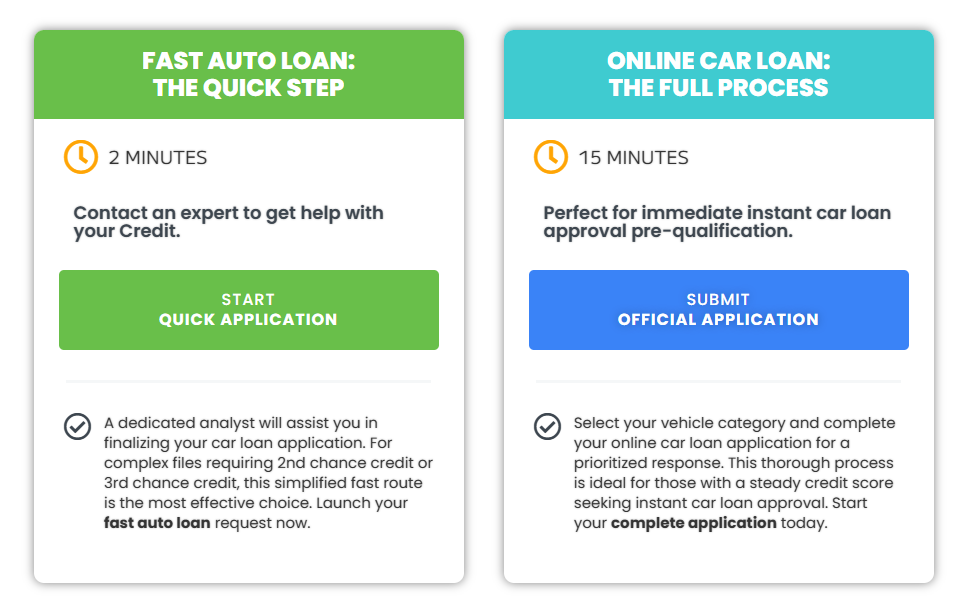
Legitimate pre-qualification starts with a conversation, not a decision. A credit analyst reviews income, monthly obligations, and the realistic room left in a household budget before any lender is approached. Only once that picture is documented does the file go out to a network of regulated lenders who compete for it. The result is something closer to fast auto loan approval that is fast because the groundwork was done properly — not fast because no groundwork was done at all. Speed and rigour are not opposites when the process is built correctly; the speed comes from having already assembled a lendable file, not from skipping the assessment.
The distinction sounds subtle, but it changes everything about the outcome. A guaranteed-credit pitch works backward from a yes; ethical pre-qualification works forward from a realistic budget. One produces a sale. The other produces a loan the borrower can actually carry to the end of its term.
Protecting Borrowers From Unsustainable Debt
A thorough pre-qualification isn’t paperwork for its own sake — it’s the mechanism that keeps a borrower out of a loan they cannot sustain. When an analyst reviews net income against fixed obligations (rent or mortgage, existing debt payments, dependents) before quoting a payment, the resulting loan structure reflects what a household can actually absorb over 36, 60, or 84 months, not just what makes a deal close today.
This is also where a credit-rebuilding plan becomes possible. An analyst who understands the full picture can recommend a shorter term with a slightly higher payment specifically because it rebuilds credit faster and costs less in total interest — a recommendation that only makes sense once the borrower’s full budget is on the table. Skipping that step doesn’t just risk a bad loan; it forecloses the better options a borrower never gets offered.
Your Rights Under Quebec Law
Consumer credit in Quebec is not a lightly regulated space. The Office de la protection du consommateur, the body responsible for enforcing the Consumer Protection Act, is explicit that credit charges — interest, administration fees, brokerage fees, and similar costs — must be disclosed as part of the annual credit rate in a written contract. In practical terms: any fee a lender or broker is entitled to charge has to be built into the disclosed, regulated cost of the credit itself, inside a contract you can read and keep. There is no separate, off-contract charge just to have your file reviewed or considered.
That’s the regulatory backdrop against which a request for an upfront “processing” or “file-opening” fee should raise an immediate flag. A consumer is never required to pay simply to be considered for a loan. Ethical brokers operating in this market charge zero pre-qualification fees and zero upfront costs — they are compensated by the lender once a loan actually funds, which is precisely the incentive structure that keeps their interests aligned with the borrower’s instead of against it.
A 40-Year Standard, Not a New Promise
This approach to pre-qualification isn’t a recent marketing pivot — it traces back to the 1980s, when Services Financiers CSM Inc. pioneered “second-chance credit” in Quebec at a time when almost no structured, transparent option existed for consumers with credit challenges. Alongside Groupe Côté, the organization built its reputation on the unglamorous work of properly documenting a file before ever promising an outcome — the opposite instinct from a guaranteed-approval banner ad.
That standard shows up in how clients actually describe the experience afterward, not just in how the company describes itself. Prêt Auto Partez holds a 4.8-star rating on Google from 1,392 reviews, and reviewers consistently point to the same two things: how quickly the pre-qualification process moved, and how clearly the rate and terms were laid out before anyone was asked to commit to anything.
Four decades of operating in a regulated, closely watched industry is not something a shortcut-driven business model survives. That longevity is itself a form of evidence: it reflects CSM financial expertise built on files that were assessed honestly the first time, loans that were structured to be repaid rather than merely signed, and a standard of practice that predates “guaranteed approval” as a marketing category altogether.
For a consumer comparing offers, the ethical test is simple to apply even without legal training: does the lender want your budget before they want your signature? If the answer is yes, and if no one is asking for money before a contract exists, the process in front of you looks like pre-qualification done right — not a guarantee dressed up to look like one.